Modern Art and War

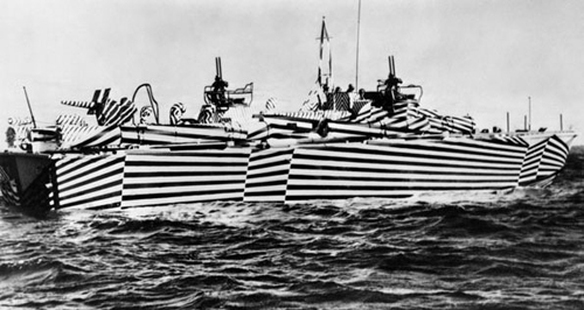
Throughout my research on art and war, I couldn’t help but pay attention to the role of modern art during ww2, particularly surrounding optical illusion and camouflage.  Painter Norman Wilkinson contributed an early example of this in World War 1 demonstrated through the development of dazzle ships, cubist artists such as Pablo Picasso have claimed the technique was originally created for this purpose. Later during World War 2 in the 1940’s, concepts in theme with surrealism and cubism had been applied to the practicality of war along with the help of artists.

The importance of camouflage and illusion held great significance as technology developed throughout the 1930’s, the visibility of planes from above and figures below had improved through methods of infrared vision and developing technology therefore, visual manipulation was more popular than ever.

Image result for dazzle ship
A “dazzle” ship in 1918.

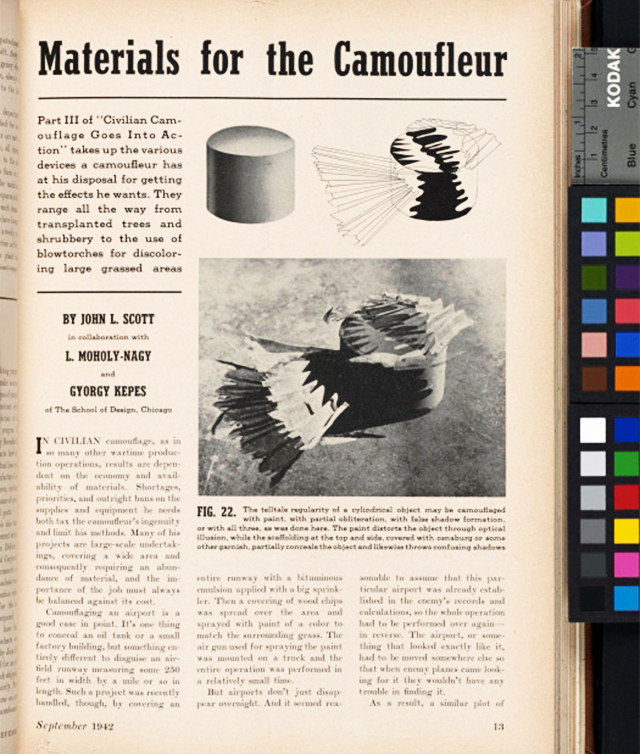
Artists such as László Moholy-Nagy, manipulated vision through kinetic patterns, and shadows in his paintings and sculptures, as a teacher at Chicago’s school of Design, he had the authority to organize students in applying the ideals of camo design after the breakout of war. The contributions of this artist and teacher varied from clever application of pain for disguise, manipulation of distance to concealing a cylindrical target such as a propane tank. The importance of Moholy-Nagy’s achievements earned him a place in the mayor’s personal staff in 1941, given the role of helping conceal Chicago in an attack.


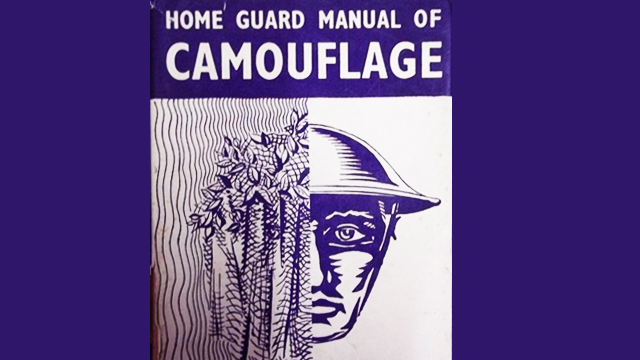
British, surrealist painter, Roland Penrose pursued the establishment of an English standard for concealment during world war two. His important book, ‘the home guard manual of camouflage’ was a diverse guide on well-known painting methods, covering styles such as pointillism and cubism in practical application to warfare. After the publication of his book he went onto found London’s institute of contemporary arts, strengthen the ties between contemporary, modern art and its unexpected aid in war; I feel this research furthers arts role of support in war.
 

I feel particularly inspired by the connections of mental illness of the concept of camouflage, I feel the exploration of modern art in relation to war and design could provide an interesting contextual starting point for the accumulation of response work. I will begin by producing a range of portraiture illustration work of different in theme styles.
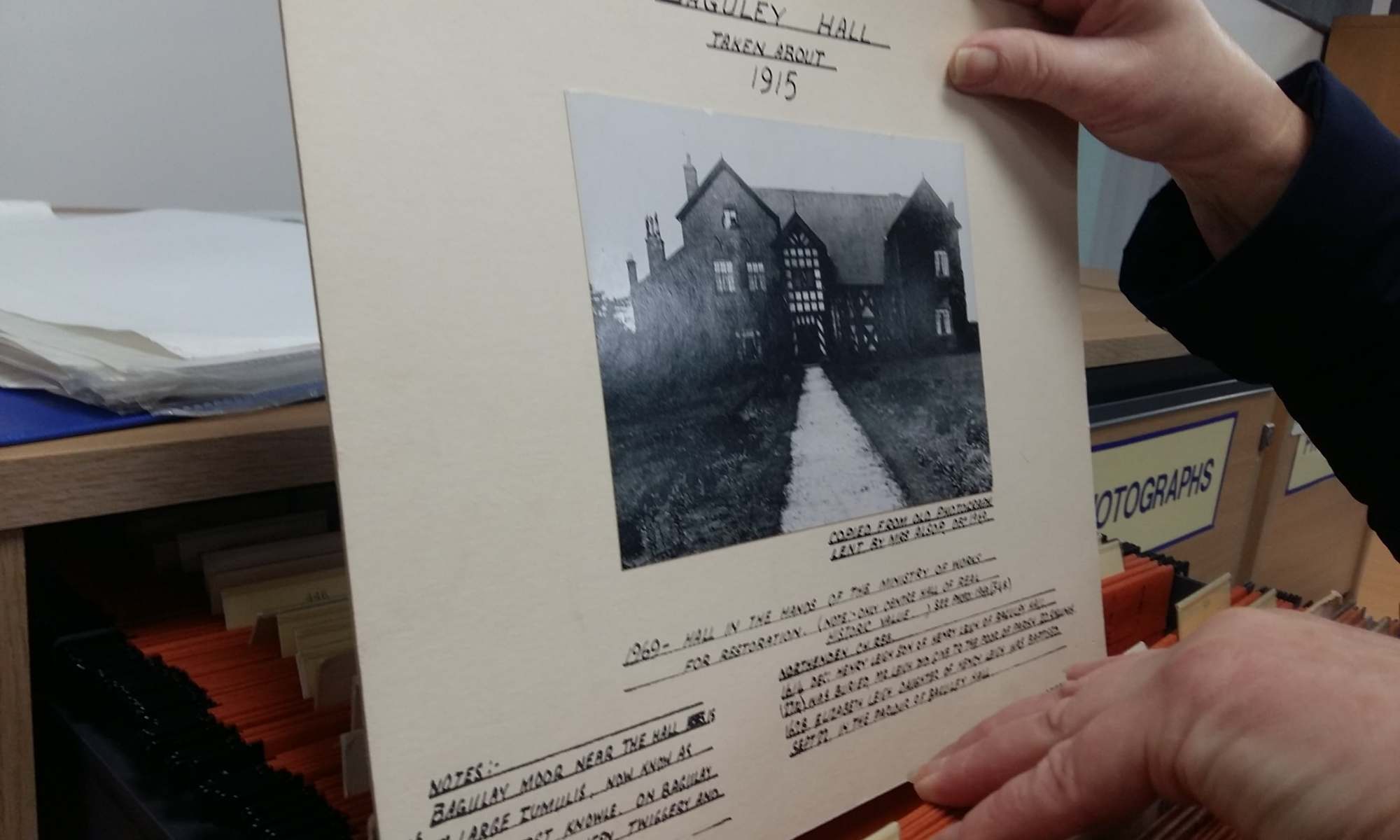
Manchester War Archives

Wythenshawe History Group

To fulfil potential within a range of my current projects, I have joined the Wythenshawe History Group and attended my first meeting on Monday the 18th. Here I became an official member and was granted a key to the archival draws in the Forum Library.


I took this opportunity to explore a varitey of archives ranging from 1912 to modern day, providing me with in depth primary material and resources. To further this research I was sent a folder of these archives and I am able to return to the library as and when I desire.

speaking with Jennifer Allen

I have been speaking with art therapist and psychoanalyst Jennifer Allen, negotiating potential ideas and processes for the mindful art therpy book. After explaining the core importance and purpose of my idea, I was provided with an indepth email exploring potential exercises, approaches and sources. Ideas such as mandalas, visulisation and tapping in were suggested for helping people with ptsd get into their body in a healthy way, regulating the nervous system. I found this advice helpful and important to the development of my idea and the effectivity of the exercises, I will use these reccomendations to build the impact and approach of my book.


Art Therapy, Trench Art and War

Political leaders, soldiers and trench art

I feel looking into trench art will provide beneficial research for my current work around art therapy, by looking to the war as a large example of emotional trauma and mental battle, we can see how art can play a role in recovery. Trench art is the term given to pieces created in the trenches of war starting in WW1, made by soldiers; it also refers to art made in response to, or during conflict by soldiers, prisoners and civilians from repurposed war materials.

Throughout my research it has become apparent that soldiers and political leaders have been employing art as a coping strategy during times of pressure and stress, by looking at how soldiers naturally created and produced artwork during these times, we can see the positive impact of art on mind and wellbeing in the 21st century.

Individuals such as: Winston Churchill, George W bush and Adolf Hitler are examples of political leaders who have valued artistic merit and expression throughout their careers, returning to creative therapeutic comfort during times of crisis and pressure.


Image result for churchill painting
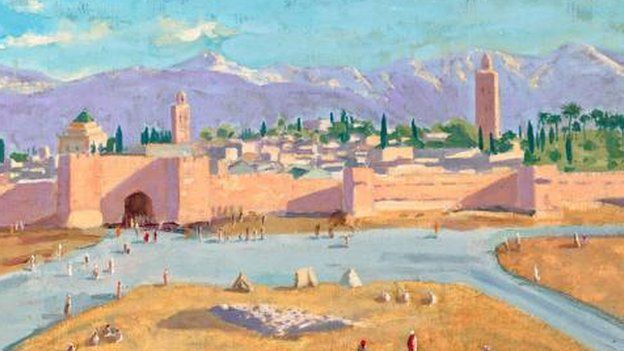
Landscape by Churchill

Winston Churchill “Painting came to my rescue in a most trying time” 1920

Churchill found painting in 1915, during a time political distress. He resigned from his government post and went onto to become an army officer; during this time of anxiety and deflation he turned to painting. In later life, Churchill would paint en plain air landscapes throughout his favourite locations in Europe as well as in his studio/garden at Chartwell. Winston also wrote ‘Painting as a pass time’ in 1948, furthering his adoration for painting throughout a stressful life of battle and leadership.


Image result for adolf hitler painter
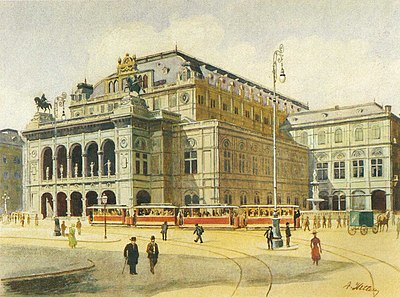
Urban Landscape by Hitler

Hitler was another example of a political leader come artist however, his passion of painting began before coming to power. When Hitler was eighteen he had already found the drive to become a professional artist applying to the art academy in Vienna twice, but being denied entry each time; painting and drawing were still a hobby throughout his later life.


Image result for bob ross


Bob Ross, famous painter known for the joys of painting, was initially an air force drill sergeant he began his painting in the military, painting the Alaskan landscapes surrounding their base. I was surprised to find out Bob Ross was ever in the military and found his passion there, I feel the more we look to the individuals within war and art we can recover further links between art and wellbeing.

“I was the guy who makes you scrub the latrine, the guy who makes you make your bed, the guy who screams at you for being late to work. The job requires you to be a mean, tough person. And I was fed up with it. I promised myself that if I ever got away from it, it wasn’t going to be that way anymore.” – Bob Ross