
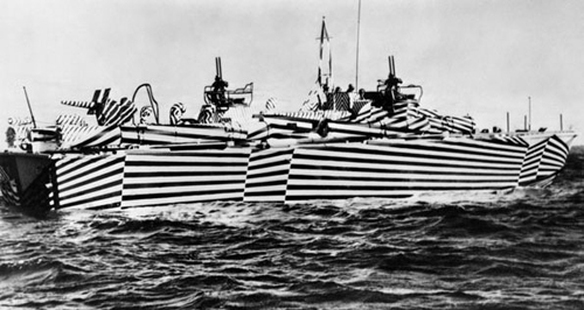
Throughout my research on art and war, I couldn’t help but pay attention to the role of modern art during ww2, particularly surrounding optical illusion and camouflage. Painter Norman Wilkinson contributed an early example of this in World War 1 demonstrated through the development of dazzle ships, cubist artists such as Pablo Picasso have claimed the technique was originally created for this purpose. Later during World War 2 in the 1940’s, concepts in theme with surrealism and cubism had been applied to the practicality of war along with the help of artists.
The importance of camouflage and illusion held great significance as technology developed throughout the 1930’s, the visibility of planes from above and figures below had improved through methods of infrared vision and developing technology therefore, visual manipulation was more popular than ever.
/https://public-media.si-cdn.com/filer/74/85/74852b88-6ff2-42d0-9add-caff6075cb8c/hms_kildangan_iwm_q_043387.jpg)
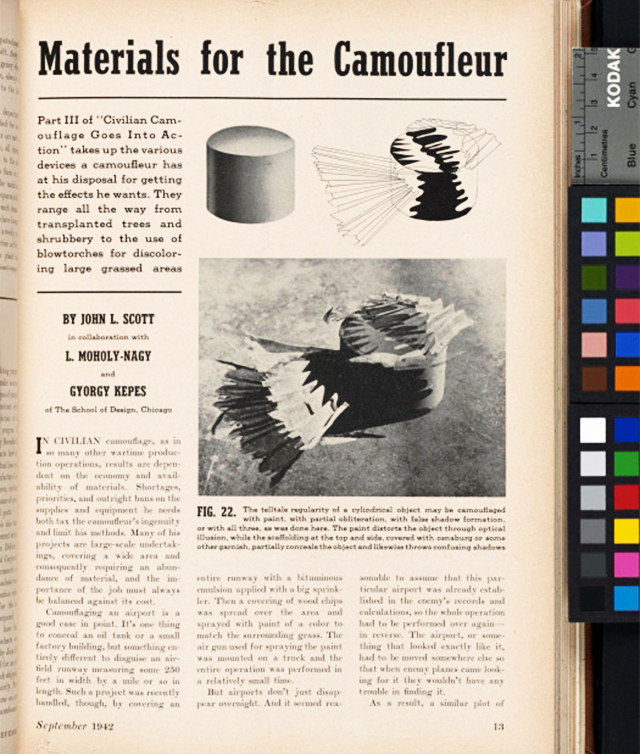
Artists such as László Moholy-Nagy, manipulated vision through kinetic patterns, and shadows in his paintings and sculptures, as a teacher at Chicago’s school of Design, he had the authority to organize students in applying the ideals of camo design after the breakout of war. The contributions of this artist and teacher varied from clever application of pain for disguise, manipulation of distance to concealing a cylindrical target such as a propane tank. The importance of Moholy-Nagy’s achievements earned him a place in the mayor’s personal staff in 1941, given the role of helping conceal Chicago in an attack.
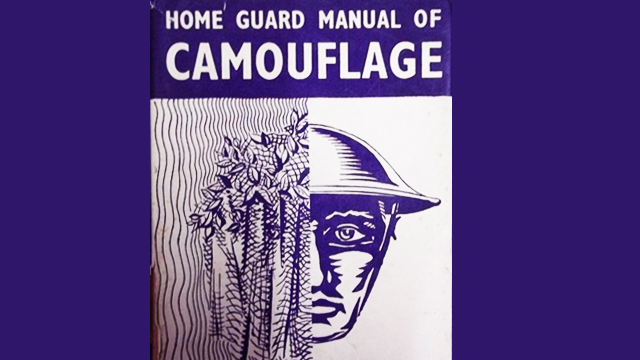
British, surrealist painter, Roland Penrose pursued the establishment of an English standard for concealment during world war two. His important book, ‘the home guard manual of camouflage’ was a diverse guide on well-known painting methods, covering styles such as pointillism and cubism in practical application to warfare. After the publication of his book he went onto found London’s institute of contemporary arts, strengthen the ties between contemporary, modern art and its unexpected aid in war; I feel this research furthers arts role of support in war.
I feel particularly inspired by the connections of mental illness of the concept of camouflage, I feel the exploration of modern art in relation to war and design could provide an interesting contextual starting point for the accumulation of response work. I will begin by producing a range of portraiture illustration work of different in theme styles.
 FAYE TIKIC