
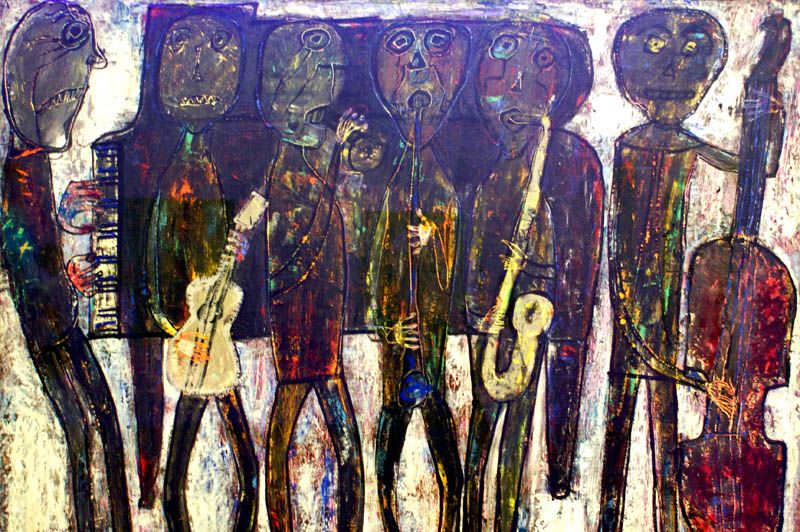
I want to explore the relationship between outsider art and art therapy. Outsider art traditionally explores the expressive works of psychiatric patients and prisoners while art therapy practices artistic expression as a form of therapy; I want to highlight the shared past and history of these art fields drawings from art created in psychiatric care. I feel by uniting these two fields I can eplore their link: how idenity is revealed and explored through artistic expression.
Outsider art or art brut – Jean Dubuffet
Jean Dubuffet played a large role within Outsider art, he was the founder of the movement Art Brut and is well known for the collection Collection de l’art brut. Jean was aware of traditional artistic principles and sought to dissolve these ideals by embracing so called “low art” and favoring humanistic, raw, emotive expression. Dubuffet refers to fine trained arts as ‘cultral art’ while refering to graffiti, street art and untrained works of artists, prisoners and children as ‘Art Brut’.
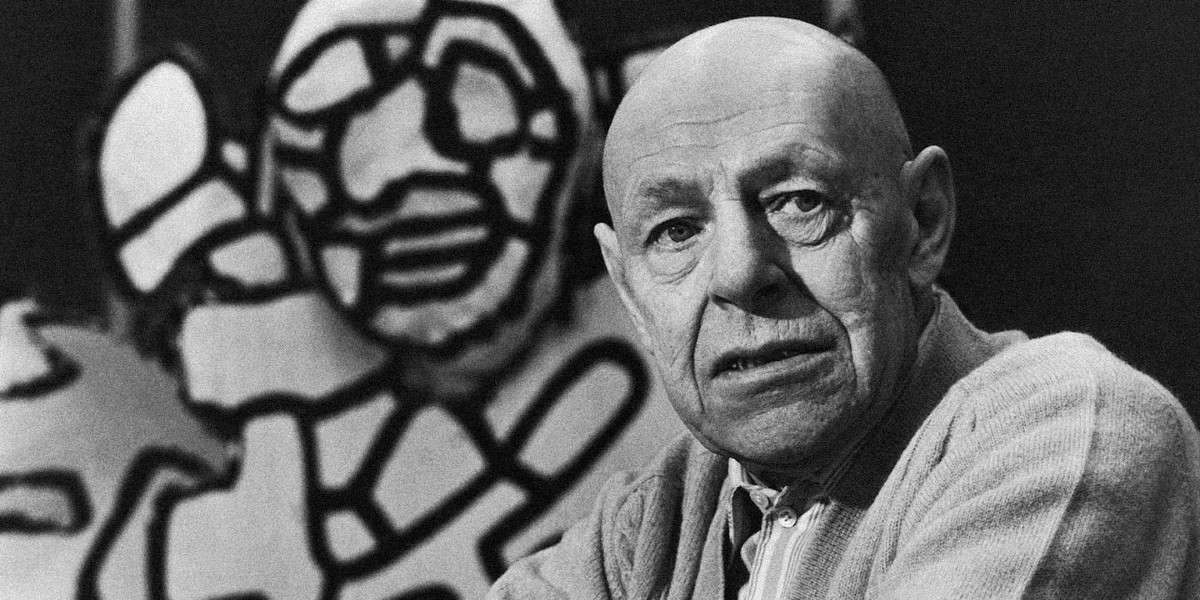
In 1948 ‘The Compagnie de l’Art Brut’ was founded by: Jean Dubuffet, Andre Breton, Jean Paulhan, Charles Ratton, Henri-Pierre Roche, Michel Tepie and Edmond Bomsel. These artists broke boundries and provided opportunity for the study of unconventional, human expression. I feel inspired by Dubuffets practice to explore outsider methods within the development of my work – I will create a series of works inspired by the works of artists involved in the Compagnie de l’Art Brut.
Der Blaue Reiter

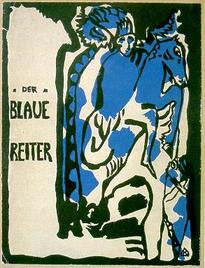
Throughout my art brut research I came across the group ‘Der Blaue Reiter’ this group was formed through artists Wassily Kandinsky, Franz Marc, August Macke, Alexej Von Jawlensky, Marianne von Werefkin, Paul Klee. This band of artists formed in response to the rejection of Kandinsky’s former group Neue Künstlervereinigung München founded in 1909 in the belief that its principles had become too traditional and restricted. The movement Der Blaue Reiter lasted between 1911 and 1914 and was considered to be fundamental to furture art movements Expressionism and Die Brucke. The movement lacked a manifesto unlike most established art movements however the principle theories were centred around Kandisky and Marcs ideaologies around spiritual truths.
Der Blaue Reiter – Outsider Group
Wassily Kandinsky
Auguste Macke
Franz Marc
Alexej Jawlensky
Albert Bloch
Lyonel Feininger
Gabriele Munter
Marianne von Werefkin
Colour Symbolism
I am interested in the groups approach to painting and im also intrigued by the origin of the movements title, Der Blaue Reiter. It is said that the painting ‘Der Blaue Reiter’ 1903 by Kandinsky was used as the movements title however throughout my research I have learnt that the name could derive from Marc’s love for horses, Kandinsky’s admiration for riders combined with their shared appreciation for the colour blue. In the artists vision, blue is the colour of spirituality – the deeper the blue the more it awakens human desire for the eternal. The group shared a common interest in expressing spiritual states and truths through their work, they strongly believed in a spontaneous, intuitive approach to painting while promoting modern art through spiritual and symbolic associations of colour. I am inspired by the principle beliefs of this movement; particularly exploring colour symbolism, I intend on exploring this within my practice through connecting colours and words then applying these colours to portrait paintings.


 FAYE TIKIC